
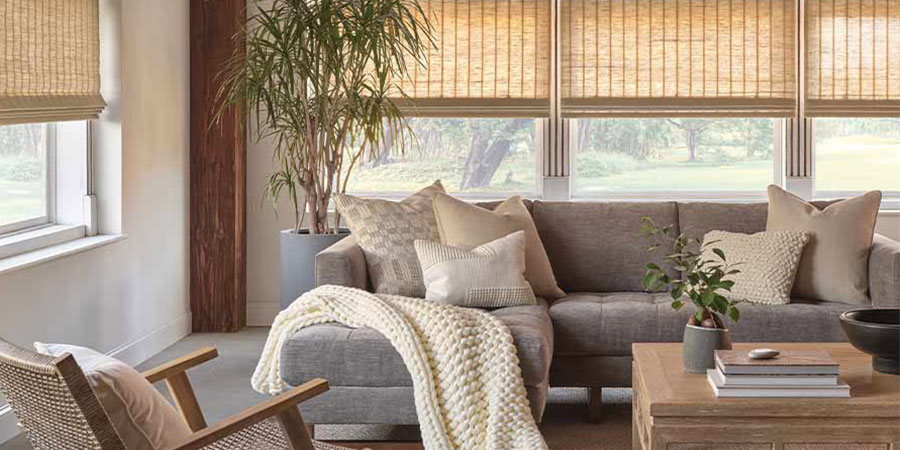
Natural textures have a way of making a room feel warm, inviting and connected to the outdoors. Bamboo shades are a popular choice for bringing that organic look to your windows, but you may have also heard them called woven wood shades or natural woven shades. Are these different window treatments, or simply different names for a similar style?
The answer comes down to the materials used. Bamboo is one of several natural fibers found in woven window coverings, and each material creates its own distinctive texture, color and appearance. Understanding these differences can help you choose shades that complement your home’s style while providing the light control and privacy you need.
What Are Bamboo Shades?
Bamboo shades are window coverings made with woven bamboo fibers, strips or slats. The natural material creates a textured appearance that adds warmth and visual interest to a room. Depending on the construction and weave pattern, bamboo shades can offer a relaxed, rustic look or a more refined, contemporary style.

One of the most appealing qualities of bamboo is its natural variation. Differences in color, texture and weave give the finished shade character, making it a beautiful choice for homeowners who appreciate organic materials.

Bamboo shades are often associated with coastal, bohemian and casual interiors, but their versatility extends well beyond these decorating styles. Natural woven textures can also complement modern, transitional and traditional spaces.
Are Bamboo Shades and Woven Wood Shades the Same?
Bamboo shades are a type of woven wood shade, but not every woven wood shade is made from bamboo. The term woven wood shades describes a broader category of window coverings crafted from natural materials, which may include bamboo, grasses, reeds and wood.

These materials are woven together in different patterns to create a flexible shade that can be raised or lowered at the window. The combination of fibers, their thickness and the spacing of the weave all influence the finished appearance.

For example, Hunter Douglas Provenance® Woven Wood Shades offer a selection of natural materials and distinctive weaves, allowing homeowners to explore a variety of textures beyond traditional bamboo shades. When comparing bamboo shades and woven wood shades, it’s helpful to look beyond the terminology and consider the actual materials, weave patterns and available customization options.
How Natural Materials Affect the Look of Your Shades
The beauty of natural woven shades comes from the materials themselves. Different fibers create variations in texture, color and the way sunlight passes through the shade.
Bamboo: Natural Warmth and Character
Bamboo brings an organic, textured appearance to window coverings. Depending on the weave and finish, bamboo shades can feel casual and relaxed or more tailored and contemporary. Their natural tones pair beautifully with wood furniture, neutral fabrics and other organic materials.
Grasses and Reeds: Subtle Texture and Dimension
Grasses and reeds introduce fine textures and distinctive woven patterns. Some combinations create an airy, open appearance, while others produce a denser, more substantial look. These materials can add visual interest without overwhelming the room’s design.

Wood: Rich Texture and Natural Variation
Wood fibers and strips can create more pronounced texture and depth. Depending on the material and weave, wood elements may contribute a structured appearance or a softer, more rustic finish.
Why Weave Patterns Matter
Beyond the materials, the openness of the weave makes a noticeable difference. Tightly woven materials generally create a more substantial appearance, while open weaves allow more sunlight to filter through and can create interesting patterns of light and shadow.

Because natural fibers vary, it’s worth viewing material samples in person. Seeing the textures and colors alongside your home’s finishes can help you select a woven shade that complements your space.
How Much Light and Privacy Do Woven Shades Provide?
Natural woven shades are known for filtering sunlight, but the amount of light and privacy they provide depends on the materials and weave selected.

More open weaves allow greater light transmission and may offer a view through the shade. This can create a beautiful atmosphere during the day, but it may not provide enough privacy for every room. When interior lights are on at night, visibility through an open weave can become more noticeable.

Denser weaves generally reduce visibility, although the level of privacy still varies by material and construction. If privacy is especially important, an optional liner may be the better solution.
Light-Filtering Liners
A light-filtering liner can provide additional privacy while allowing softened natural light into the room. This option works well in living rooms, dining rooms and other spaces where you want a balance of daylight and privacy.
Room-Darkening Liners
For bedrooms or spaces where reducing incoming sunlight is a priority, a room-darkening liner can provide greater light control. The amount of room darkening depends on the shade, liner and installation, so it should not be confused with a guarantee of complete blackout.
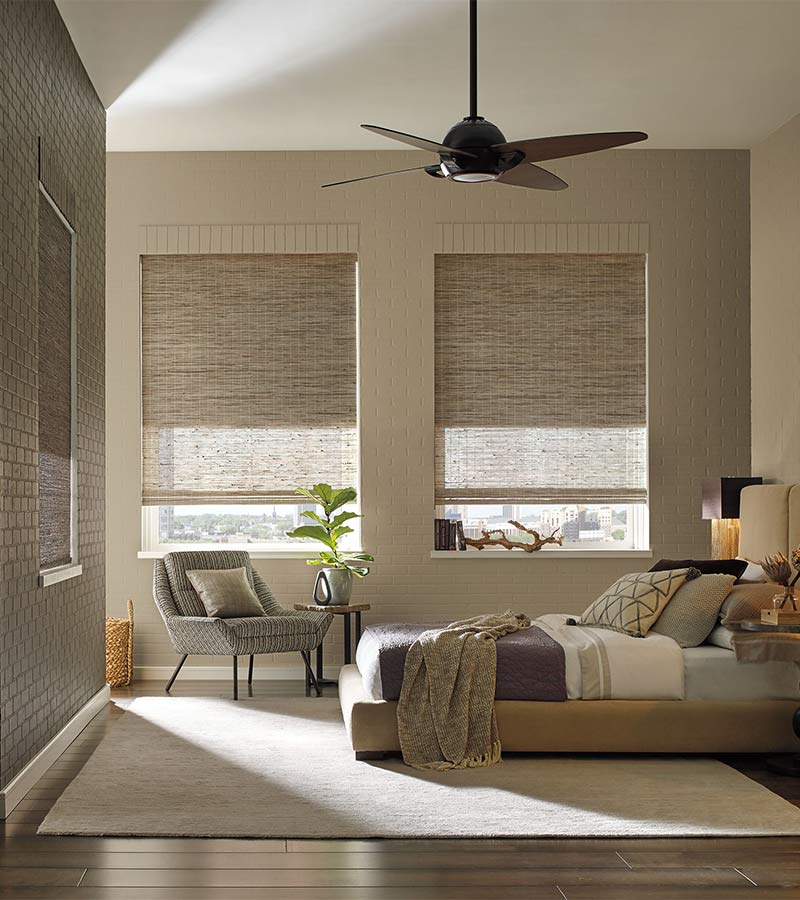
Understanding the difference between filtering and blocking light can help you choose the right configuration for each room. Our guide to light filtering and room darkening explains these options in more detail.
Choosing Natural Woven Shades for Your Home
Natural woven shades can work beautifully throughout the home, but the best material and configuration will depend on how each room is used.
Living Rooms and Family Spaces
Woven shades bring warmth and texture to living spaces, especially when paired with neutral furnishings, natural wood finishes and soft fabrics. Consider how much daylight enters the room and whether additional privacy is needed during the evening.
Bedrooms
In bedrooms, privacy and light control are often more important than maintaining a view through the shade. A denser weave or optional room-darkening liner can help create a more comfortable environment while preserving the natural woven appearance.

Dining Rooms and Home Offices
Natural woven materials can soften the look of dining rooms and home offices without making the space feel overly formal. If sunlight causes glare on screens or work surfaces, consider a weave and liner combination that offers more control.
Coastal and Contemporary Interiors
For homes in Halifax, Bedford, Dartmouth and surrounding Nova Scotia communities, woven shades can complement a wide range of interiors. Light natural tones suit airy coastal spaces, while darker weaves can add contrast to contemporary rooms. Their texture also pairs well with custom drapery when you want a more layered window design.
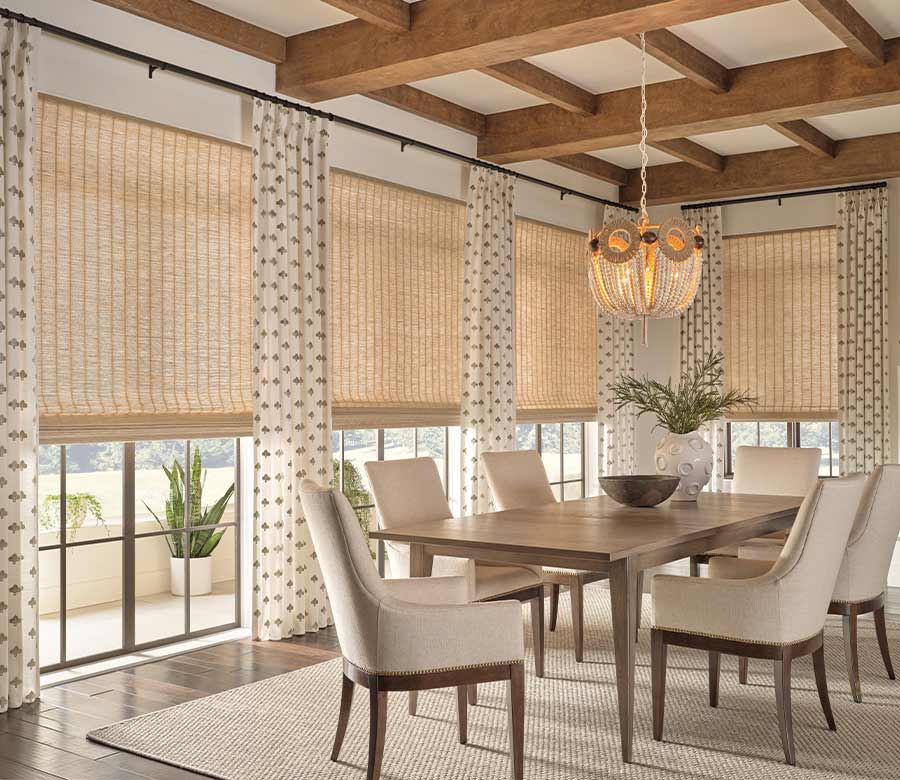
As you compare options, think about the amount of sunlight each window receives, your privacy needs, the surrounding furnishings and how frequently you’ll adjust the shades. In rooms with greater moisture or humidity, it’s also important to discuss material suitability with your window treatment designer.
Explore Hunter Douglas Provenance® Woven Wood Shades
If you love the look of bamboo shades but want to explore additional natural materials, Hunter Douglas Provenance® Woven Wood Shades offer a collection of distinctive fibers, colors and weave patterns. Provenance® shades can be customized with optional light-filtering or room-darkening liners for greater privacy and light control. Select configurations can also include a secondary cellular shade for added insulation or PowerView® Automation for convenient motorized operation.
At Gotcha Covered Seeview Blinds & Shutters, our designers can help you compare natural materials, explore weave samples and choose window coverings suited to your home’s style and everyday needs. Discover the available materials, styles and customization options in our Hunter Douglas Provenance® Woven Wood Shades collection, or visit our Bedford showroom to explore your options in person.