
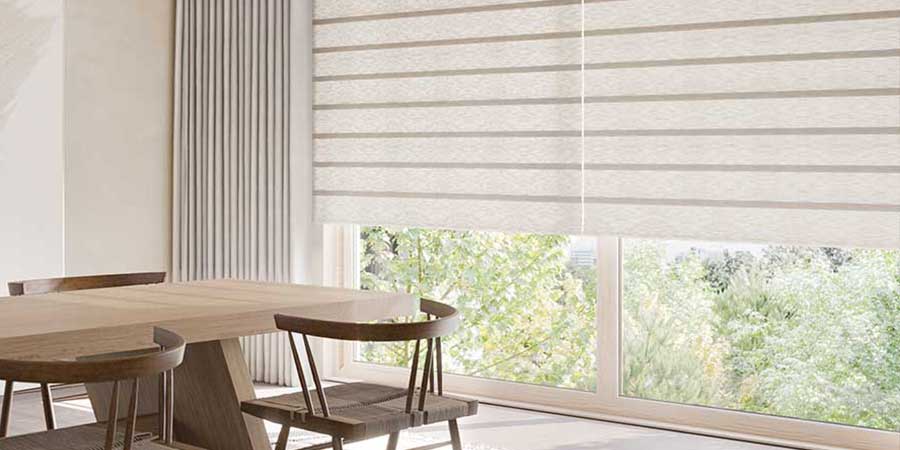
Because of their rich, flowing folds, custom drapery naturally pairs well with more streamlined window treatments like blinds and shades. This combination creates a stately, layered look while enhancing insulation, light control, and privacy. When thoughtfully designed, pairing drapery with shades or blinds allows you to express personal style while improving the overall function of your windows.
Our design experts at Seeview Blinds & Shutters are happy to share practical tips and design inspiration to help you confidently pair drapery with other window treatments throughout your home.
Keep It Simple with Layering
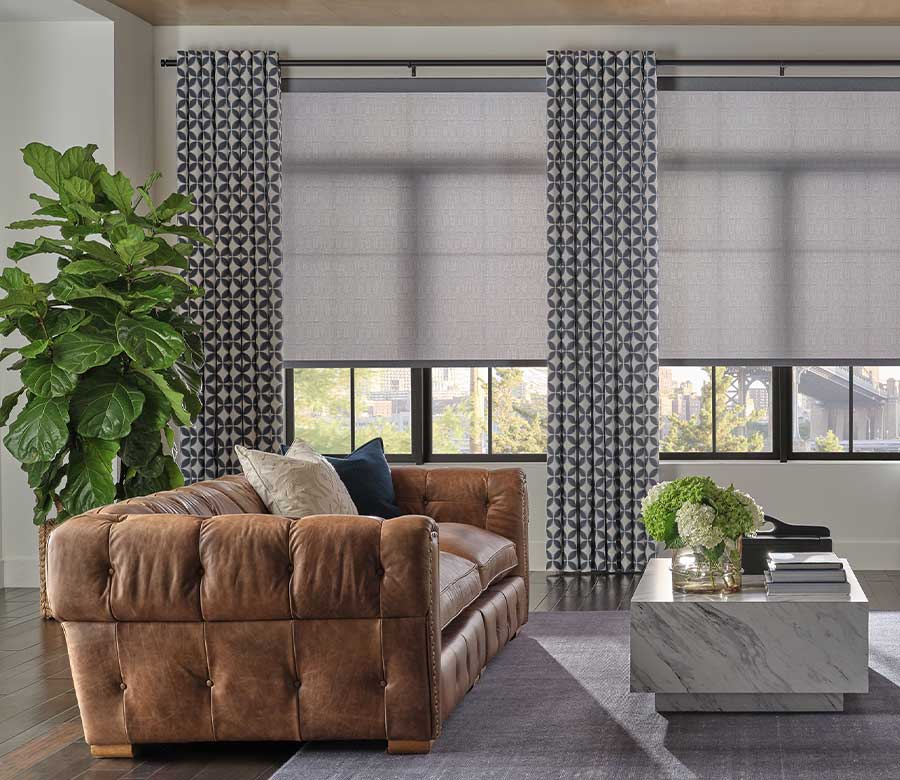
Layering window treatments leans toward a more maximalist design approach, so simplicity is key. Avoid mixing too many bold patterns at once. Instead, pair a patterned drape with a solid blind or shade—or reverse the combination for balance.
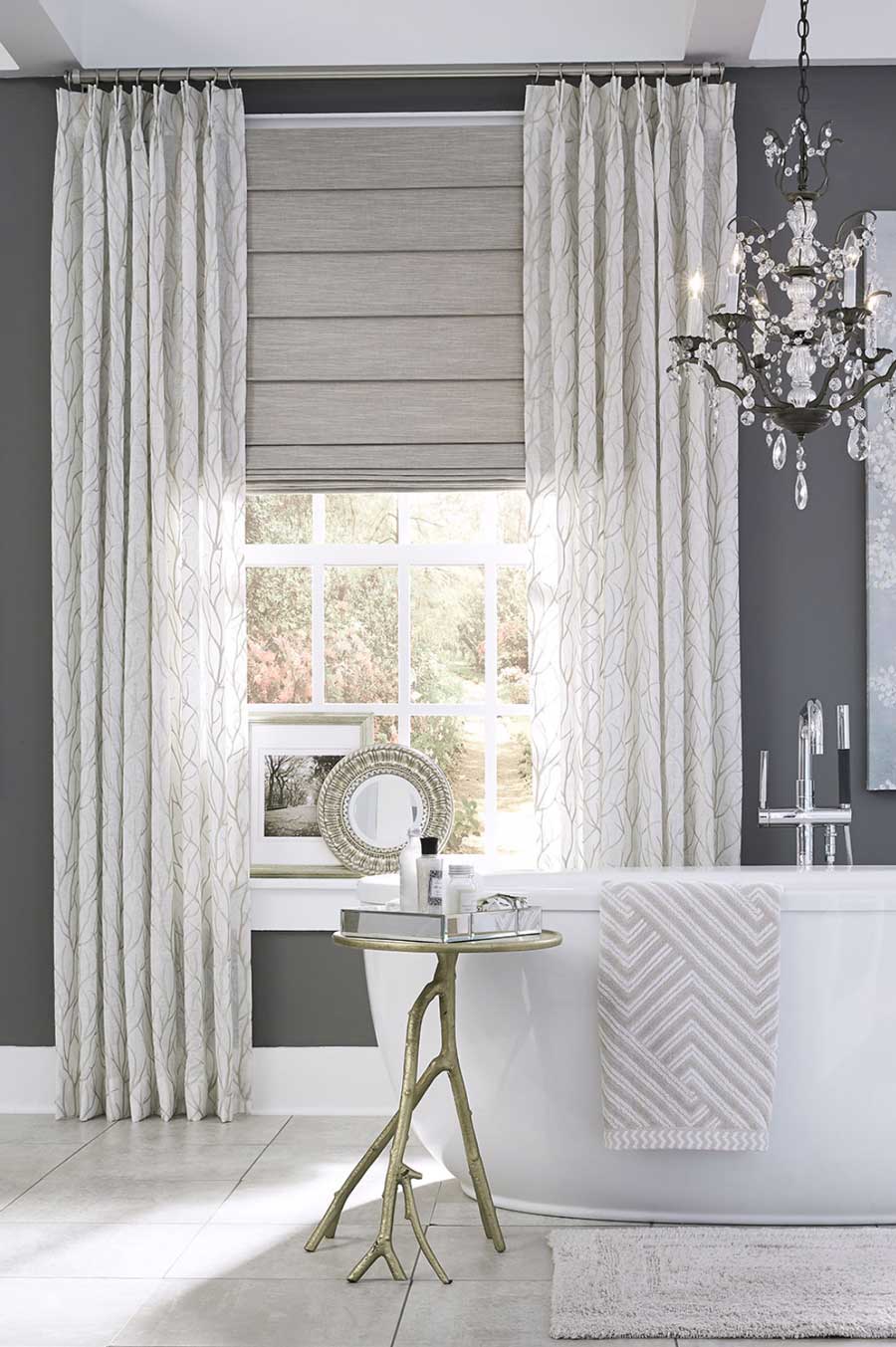
If you have a confident design eye, patterns can be used together successfully when they share similar tones. For example, a floral drape can work beautifully with a lightly striped shade in the same color family, or a subtle damask drape can complement a softly textured shade. The goal is harmony, not competition.
Use Patterns and Textures to Add Depth
When it comes to drapery trends, patterns and textures are an excellent way to add dimension to layered window treatments. Textured shades—such as woven woods—bring warmth and organic detail, while drapery introduces softness and structure. This combination allows you to highlight subtle design elements without overwhelming the space.
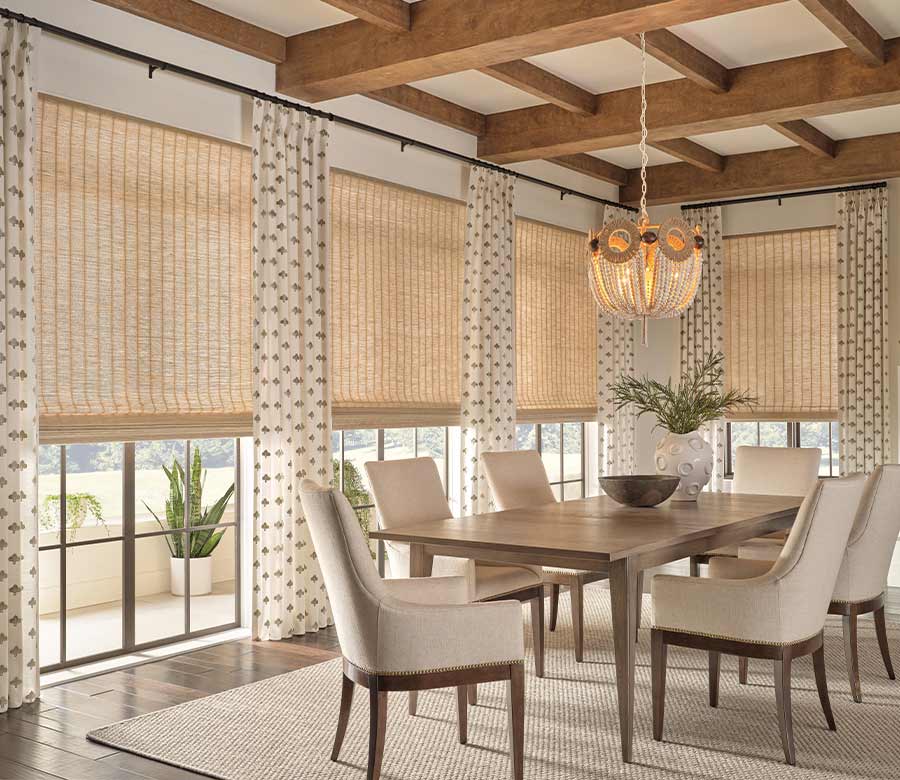
Woven shades paired with lightly patterned drapery fabrics are especially popular in dining rooms and living spaces, where texture can enhance visual interest while still maintaining a refined look.
Neutral Pairings for a Timeless Look
Neutral palettes continue to be a favorite in home design, and for good reason. Neutral shades and drapery create a flexible foundation that allows homeowners to update accent colors and decor over time without replacing window treatments.
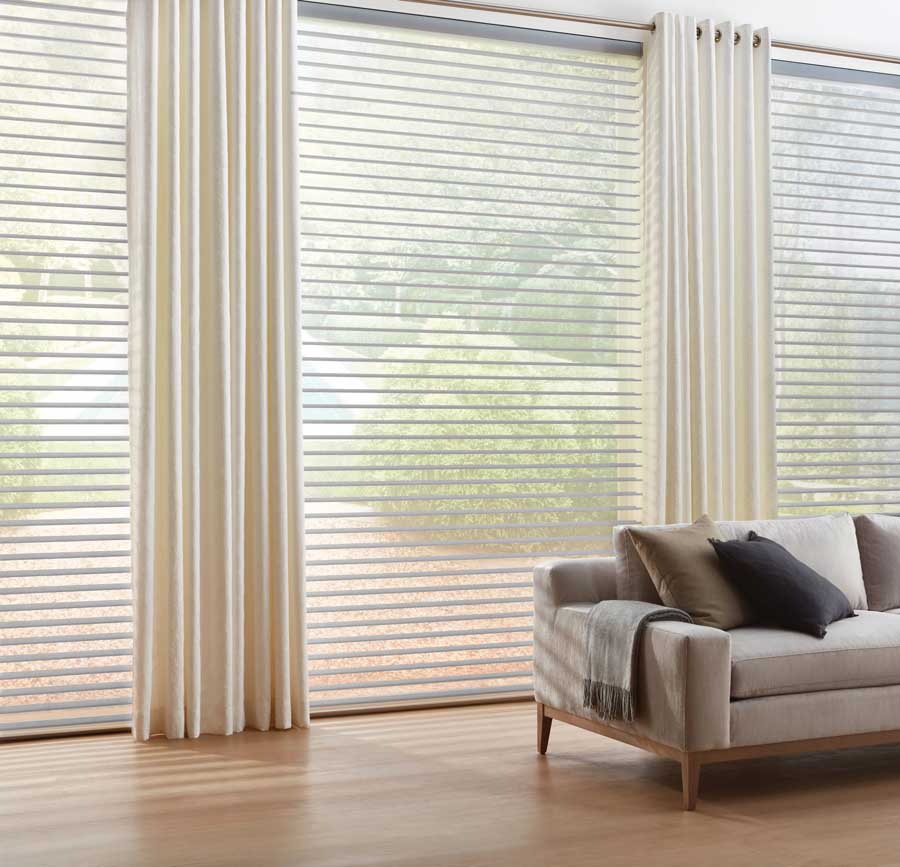
Sheer or light-filtering neutral shades help open up a room and make it feel larger, while neutral drapery panels frame the window and add height. Fabrics like jacquard are especially popular because they offer enough weight for light control and privacy, along with subtle texture that becomes more apparent up close.
Consider Drapery Length and Hanging Position
Drapery length and placement significantly influence the final look of your windows. For a dramatic, elegant effect, allow drapery panels to pool slightly at the floor. To make ceilings feel taller, mount drapery hardware closer to the ceiling and extend panels down to the floor.
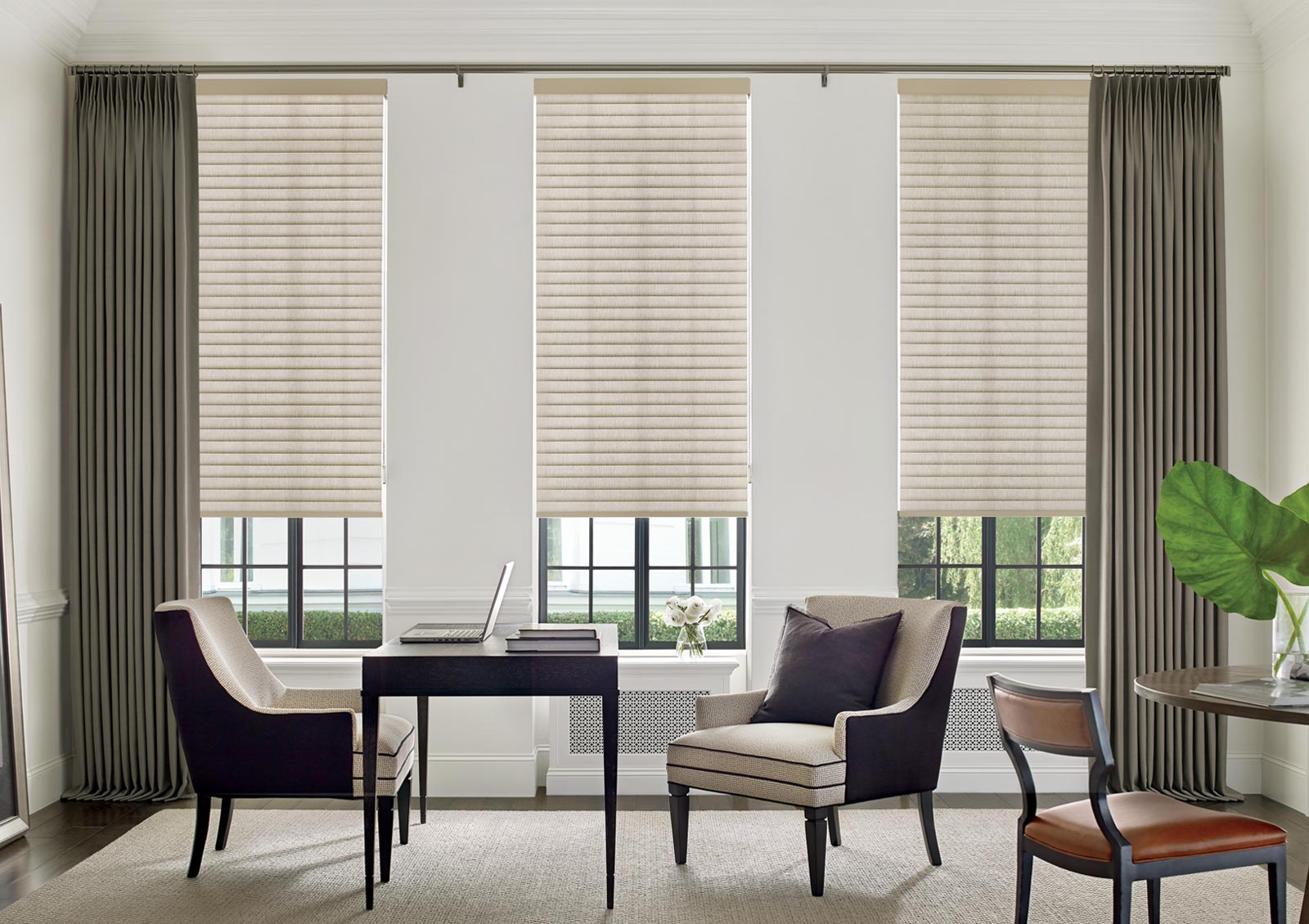
When layering with blinds or shades, ensure the lengths do not overlap awkwardly. Typically, shades and blinds should fit neatly within the window frame, allowing drapery to frame the window without interfering with operation.
Choose the Right Drapery Style
Draperies are available in both side panels and full panels, each offering distinct styling options. Explore pinch pleat drapery details and other various header styles.
Pinch Pleat Styles
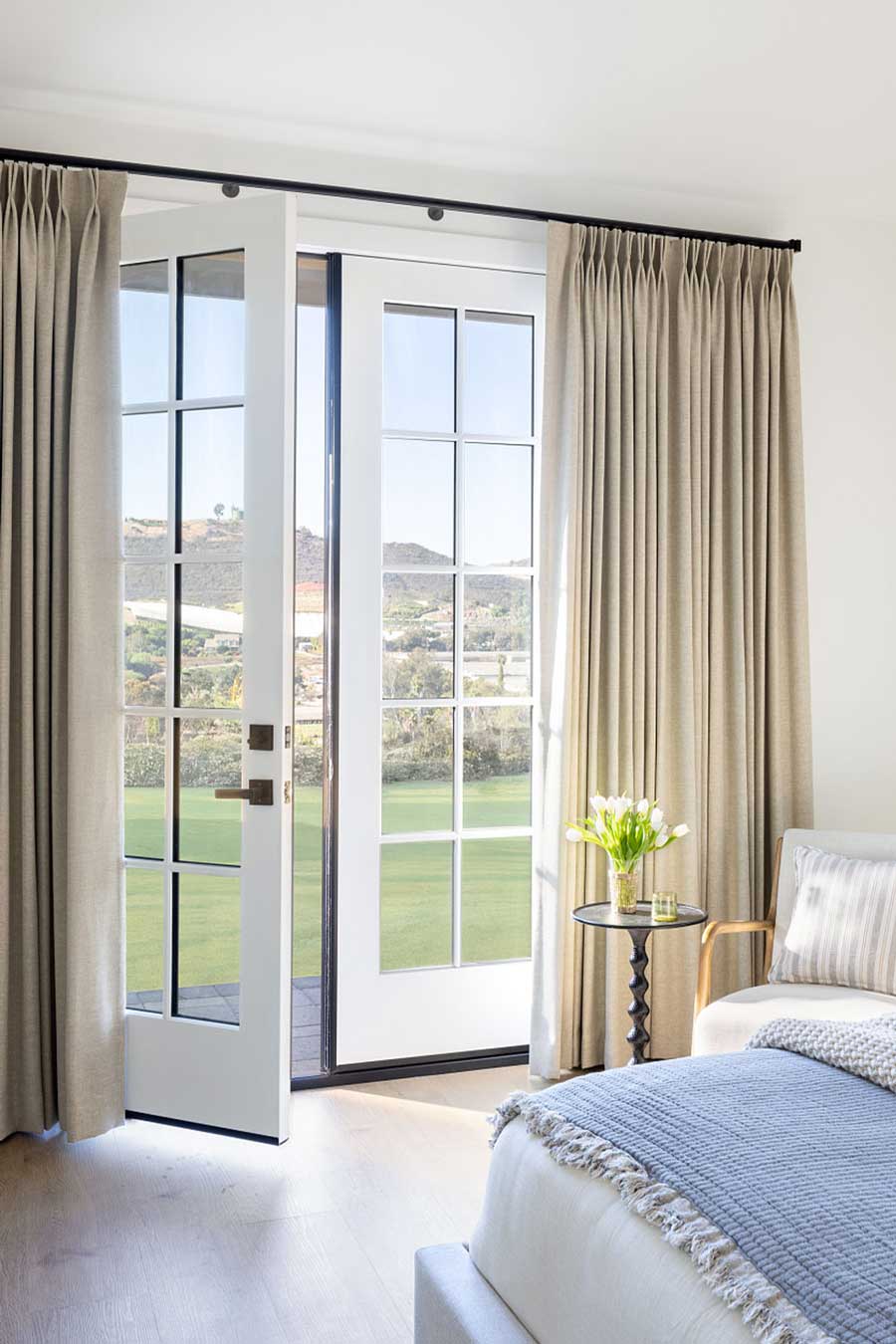
Two-Finger Pinch-Pleat: A classic look where pleats are pinched together near the top, creating structured folds with customizable fullness.
Two-Finger European Pinch-Pleat: Pinched at the top and open below, allowing the fabric to billow gracefully toward the floor.
Other Header Styles
Grommet: Metal rings are attached inside the top of the drapery, sliding over the rod for simple opening and closing.
Ripple Fold: A modern, streamlined option where snaps along the header create consistent, flowing waves across the panel.
Once you’ve selected your drapery style, it’s time to choose complementary blinds or shades.
Pairing Drapery with Hunter Douglas Blinds and Shades
Hunter Douglas offers a wide range of blinds and shades that layer beautifully with drapery:
Window Blinds
- Parkland® Wood Blinds: Crafted from 100% natural wood in a variety of finishes
- EverWood® Alternative Wood Blinds: Ideal for spaces with humidity or moisture concerns
- Modern Precious Metals® Aluminum Blinds: Sleek and contemporary with durable finishes
Window Shades
- Designer Roller Shades: Clean, minimalist styling in many fabrics and textures
- Designer Screen Shades: Excellent for reducing glare and UV exposure
- Designer Banded Shades: Balance light control and privacy
- Cellular and Honeycomb Shades: Energy-efficient options that improve insulation
- Vignette® Modern Roman Shades: Soft folds with a tailored appearance
Using Contrast for Visual Impact
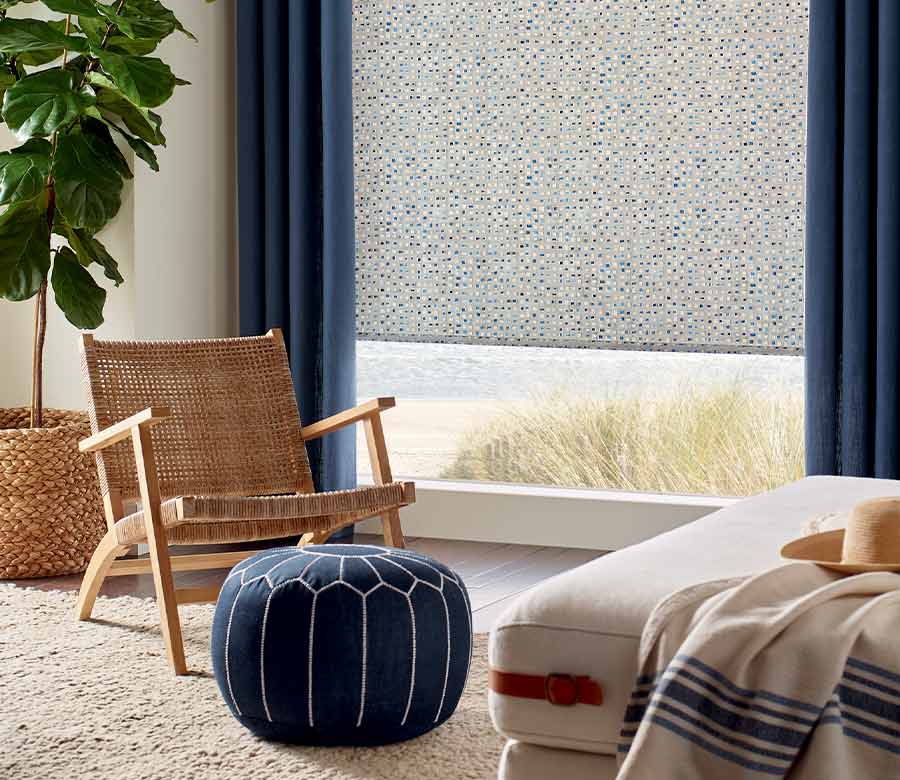
Contrasting colors are a popular way to make layered window treatments stand out. Often, drapery is selected in a richer or bolder hue, while the shades or blinds remain neutral. This approach draws attention to the window as a design feature and helps coordinate fabrics with the surrounding decor.
Installation Considerations Matter
When pairing shades with drapery, proper installation is essential for smooth operation. Newer windows typically offer enough depth for inside-mounted shades, making it easier to layer drapery over them. Older windows may require outside-mounted shades, which can make layering more challenging. The popularity of motorized shades and drapery is on the rise, and we will be happy to help guide you through the best operating features for your windows.
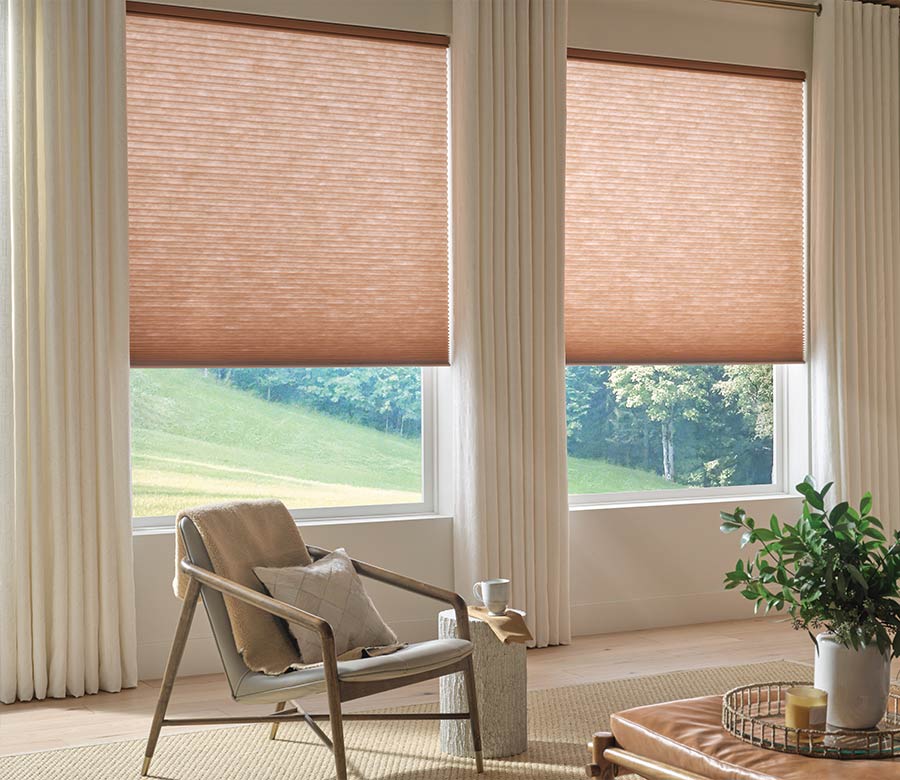
In these cases, low-profile shade options and professional installation ensure everything functions properly without sacrificing style. Our expert team can guide you through these decisions and handle installation with precision.
Contact Seeview Blinds & Shutters for Drapery and Window Treatments
Seeview Blinds & Shutters is your trusted source for custom drapery, blinds, and shades. Our experienced team will help you pair window treatments that enhance both the beauty and functionality of your home. Visit our showrooms in Bedford, or schedule a free in-home consultation. We proudly serve Halifax and surrounding communities and look forward to helping you create stunning, layered window designs.